A Lessening Gap
Bridging the gap between IT and operational technology often feels impossible, creating significant challenges for businesses. The integration of Armis into ServiceNow is set to change that. This powerful combination delivers comprehensive OT asset visibility, creating a single, reliable OT asset inventory where there was once a blind spot.
You know what? The gap between IT and Operational Technology (OT) is getting smaller every day. But honestly, for most organizations, it still feels like trying to bridge a canyon with a piece of string.
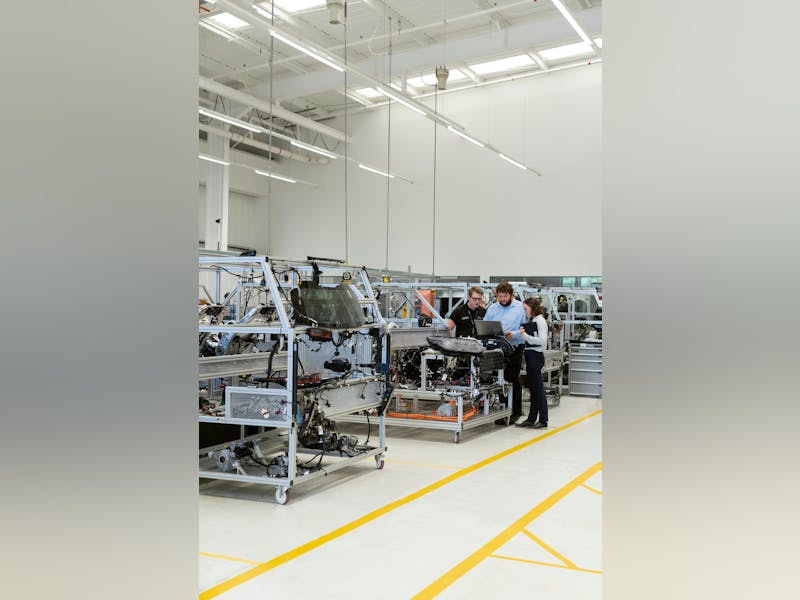
If you’ve been working in the ServiceNow ecosystem for a while, you’ve seen the shift. We aren’t just managing laptops and servers anymore. We’re looking at production lines, PLCs, sensors – the heavy machinery creating value for businesses.
Here’s the thing. Managing OT is complex, and getting the full picture can be difficult.
Most companies have a fragmented landscape. You might have a Siemens tool managing your Siemens hardware. Then you have another tool for Rockwell, another for Honeywell, and maybe a spreadsheet from 2018 trying to track the rest. It’s a nightmare. You end up cycling through a dozen different dashboards just to figure out what devices you actually have.
That is exactly why ServiceNow’s recent move to acquire Armis changes the game. This isn’t just an “upcoming integration” or a friendly partnership anymore – it’s a massive commitment to solving this problem natively. We think this acquisition is exciting, and we are genuinely looking forward to seeing it in full effect. Once Armis’s discovery capabilities are fully baked into the ServiceNow platform, managing that complex OT landscape is going to get a whole lot easier.
Closing the HAM and SAM Gap
Let’s talk about Hardware Asset Management (HAM) and Software Asset Management (SAM) for a second.
Historically, asset management for OT have had little focus. When a device worked, it kept working as long as we did not change it. . We usually have a pretty good handle on our IT estate. We know how many Windows servers we have. We know who has an Adobe license.
But on the factory floor? It’s often a mystery.
This unified capability is smart because it finally brings OT into the HAM and SAM fold. You can’t manage what you can’t see. An we increasing connectivity to ressourceses outside the closed OT enviroments, we need to organize HAM and SAM in the same structured manner we have done it for IT in a number of years. With Armis data living natively inside ServiceNow, you can finally track the lifecycle of industrial assets just like you track laptops. You can see software vulnerabilities on a lathe machine. That is a level of visibility most operations managers only dream of. All this without compromizing the integrety of the physically OT environments.
Our Approach to OT Service Management
When we look at this from an architectural standpoint, we don’t just want to be dumping data into a table. Instead, we are looking at what we choose to dub “OT Service Management.”
It breaks down into four key areas:
The Strategic Value
So, why should you care?
Because the convergence of IT and OT isn’t stopping. The businesses that figure this out – how to manage a production line with the same efficiency as a help desk – are going to win.
By using Armis to handle the discovery and normalization, and ServiceNow to handle the context and workflow, you get the full picture. You stop guessing. You stop swivelling between screens.
You get a single view of the truth. And in a world where downtime costs a fortune, that clarity is worth its weight in gold.
Key Takeaways:
Stop the Tool Fatigue - Armis will be used to consolidate data from niche OT tools (like Siemens or Rockwell) so you don’t have to check ten different places.
Context is Everything - Armis finds the device; ServiceNow tells you its business value and owner. You need both.
Fix the Blind Spot - Use the integration of Armis to finally get HAM and SAM working for your operational technology.
Speed to Value - This setup lets you map entire production lines and locations way faster than manual discovery ever could.
It’s about getting the full picture. For years, OT teams have managed complex, business-critical systems without the centralized visibility IT takes for granted. It’s exciting to finally see a unified platform that gives those operational assets – and the teams that run them – the enterprise-grade backing they deserve.